Choosing the Right Finger Joint Line: Sizes, Machines, and Support
When it comes to woodworking and timber manufacturing, few joinery techniques are as effective and widely used as the finger joint line. In this post, we focus on the woodworking and industrial manufacturing context of finger joint lines—not the anatomical one—exploring what it is, how it’s used, and what matters most when choosing one for your operation.
What Is a Finger Joint Line in Woodworking?
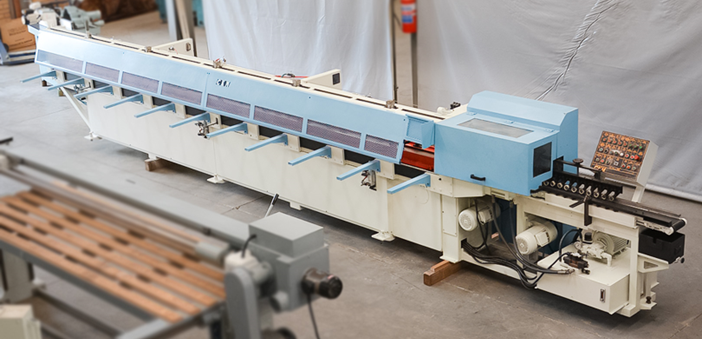
A finger joint line refers to the visible seam created when two pieces of wood are joined using a series of interlocking “fingers.” These are precision-cut rectangular shapes that interlock like a comb. The result is a long, strong board made from shorter offcuts. In mass production, this process is handled by a finger joint line machine or an entire finger joint production line, streamlining the process of end-to-end wood joining.
This type of joint is used to produce longer structural timber, mouldings, frames, and even core panels for plywood. It offers an ideal combination of joint strength, aesthetic alignment, and efficient material usage.
Finger Joint Line Sizes: Matching Capacity to Your Needs
Fully Automatic vs Semi-Automatic: What’s the Difference?
At GFP Machines, we stock a variety of finger joint line sizes, each suitable for different scales of operation:
- Compact & Semi-Automatic Lines.
- Production range: 5–10 cubic meters per day.
- Best for: Joinery workshops, custom furniture makers, and businesses processing offcuts.
- Features: Manual loading, basic gluing and pressing systems, often table saw-based setups.
- Mid-Sized Industrial Lines
- Production range: 10–25 cubic meters per day.
- Best for: Moulding and trim manufacturers, medium-sized factories.
- Features: Integrated feed, glue rollers, and semi-automatic pressing.
- Fully Automatic Finger Joint Lines
- Production range: 25+ cubic meters per day.
- Best for: Structural timber manufacturers, door/window frame suppliers, laminated beam producers.
- Features: Automated feed, gluing, clamping, pressing, and stacking; CNC-based control for speed and accuracy.
Each machine is chosen and stocked based on its build quality, reputation, and compatibility with the African manufacturing environment.
Fully Automatic vs Semi-Automatic: What's the Difference?
Common Applications of Finger Joint Lines
A fully automatic finger joint line performs the entire process with minimal operator input. These machines are ideal for high-output production, where speed and consistency matter most.
A semi-automatic or manual finger joint system still delivers strong, reliable joints but requires more operator involvement. These systems are easier to maintain and ideal for custom production environments or entry-level operations.
Common Applications of Finger Joint Lines
The finger joint line is one of the most versatile tools in wood production. Here are real-world examples of its application:
- Furniture manufacturers: Use compact finger joint lines to join frame components and drawer parts.
- Laminated beam producers: Depend on fully automatic lines to splice long structural members for roofing and framing.
- Plywood core plants: Create internal core material from offcuts using high-volume finger joint production lines.
- Picture frame factories: Use finger joint lines for clean, hidden joints with minimal visual disruption.
The key advantage? Maximizing timber yield while maintaining strength and visual quality.
Machines That Are Fully Serviced & Guaranteed
At GFP, every machine goes through a detailed inspection and servicing process. Whether it’s a finger joint cutter or a full production line:
- We replace worn parts
- Service and test machines under load
- Ensure electrical compliance
- Provide a performance guarantee
We believe that when you’re buying pre-owned, you’re not taking a risk — you’re gaining an asset that delivers from day one.
Why After-Sales Support Makes the Difference
Buying a finger joint machine is only the beginning. Support matters just as much as performance.
With GFP, you get:
- Expert technicians for remote and on-site support
- Spare parts locally available
- Advice on glue selection, machine settings, and maintenance
- Long-term support that extends beyond installation
Too many companies invest in machinery without local expertise or backup, only to find themselves stuck when problems arise. With GFP, you have a partner who understands the equipment and the African production environment.
Summary: Investing Smart in Finger Joint Line Machinery
Whether you’re cutting finger joint lines for structural timber, producing clean comb joints for furniture, or scaling up your finger joint manufacturing line, choosing the right machinery and supplier is key.
GFP Machines offers:
- A wide range of finger joint line machines
- Fully serviced and guaranteed equipment
- Proven support for customers across Africa
- Advice tailored to your capacity, workflow, and product requirements
If you want to produce clean, strong, and efficient finger joint lines with machines you can rely on, talk to GFP today.
Looking for specific advice or a stock list? We can walk you through the right size, capacity, and automation level for your needs. Let’s help you cut stronger, smarter, and more sustainably